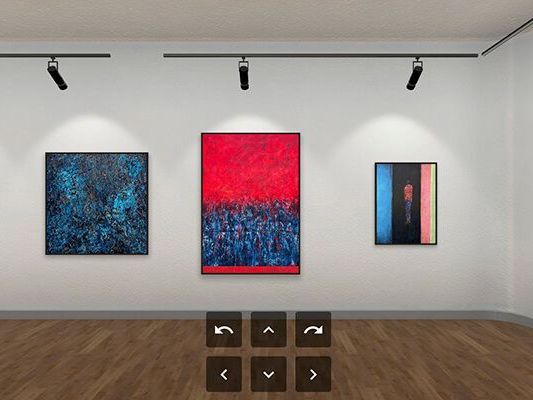
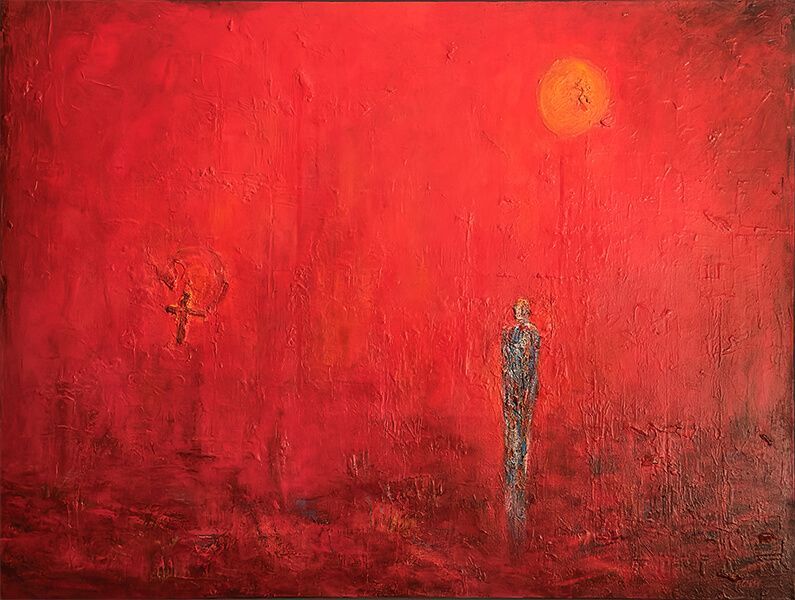
Choosing the Right Size Painting: A Practical Guide to Scale and Space
A practical guide to choosing the right size painting for your home, with advice on wall measurements, sofa proportions, hanging height, textured surfaces and original artwork.
Choosing the right size painting is partly practical and partly instinctive. You can measure the wall, check the furniture, and follow a few useful rules, but scale is also about how a painting feels in a room. A large work can hold a space. A smaller piece can ask you to come closer. A textured surface can carry more weight than its measurements suggest.
I should say from the start that I am not an interior designer. These are not fixed rules. They are simply things I have noticed through making paintings, seeing them in different spaces, and thinking about how scale changes the way a work is felt.
A painting does not end when it leaves the studio. It changes when it enters a home. The light changes it. The wall changes it. The distance from the viewer changes it.
This guide is a practical way to think about scale without losing sight of the feeling that drew you to the work in the first place.
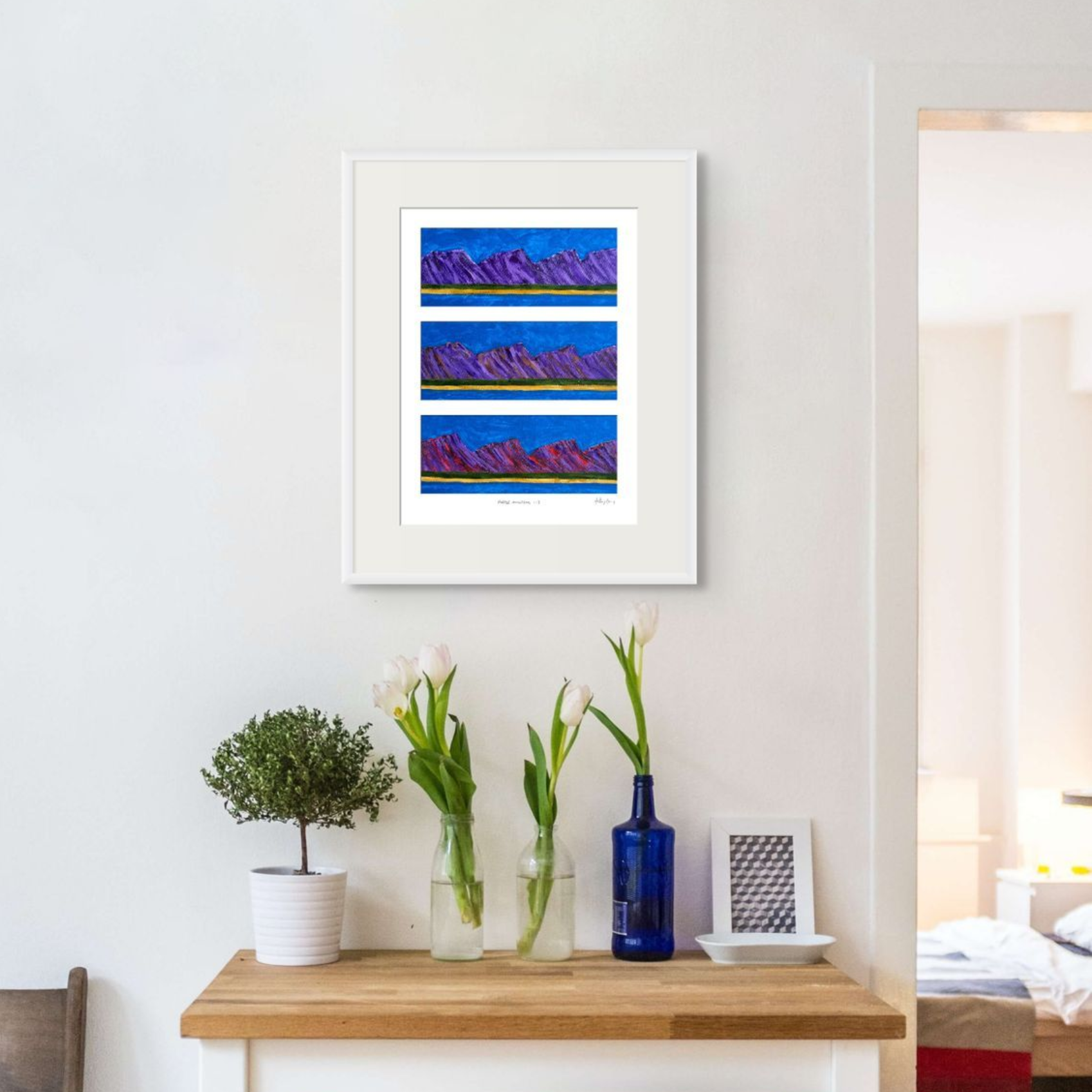
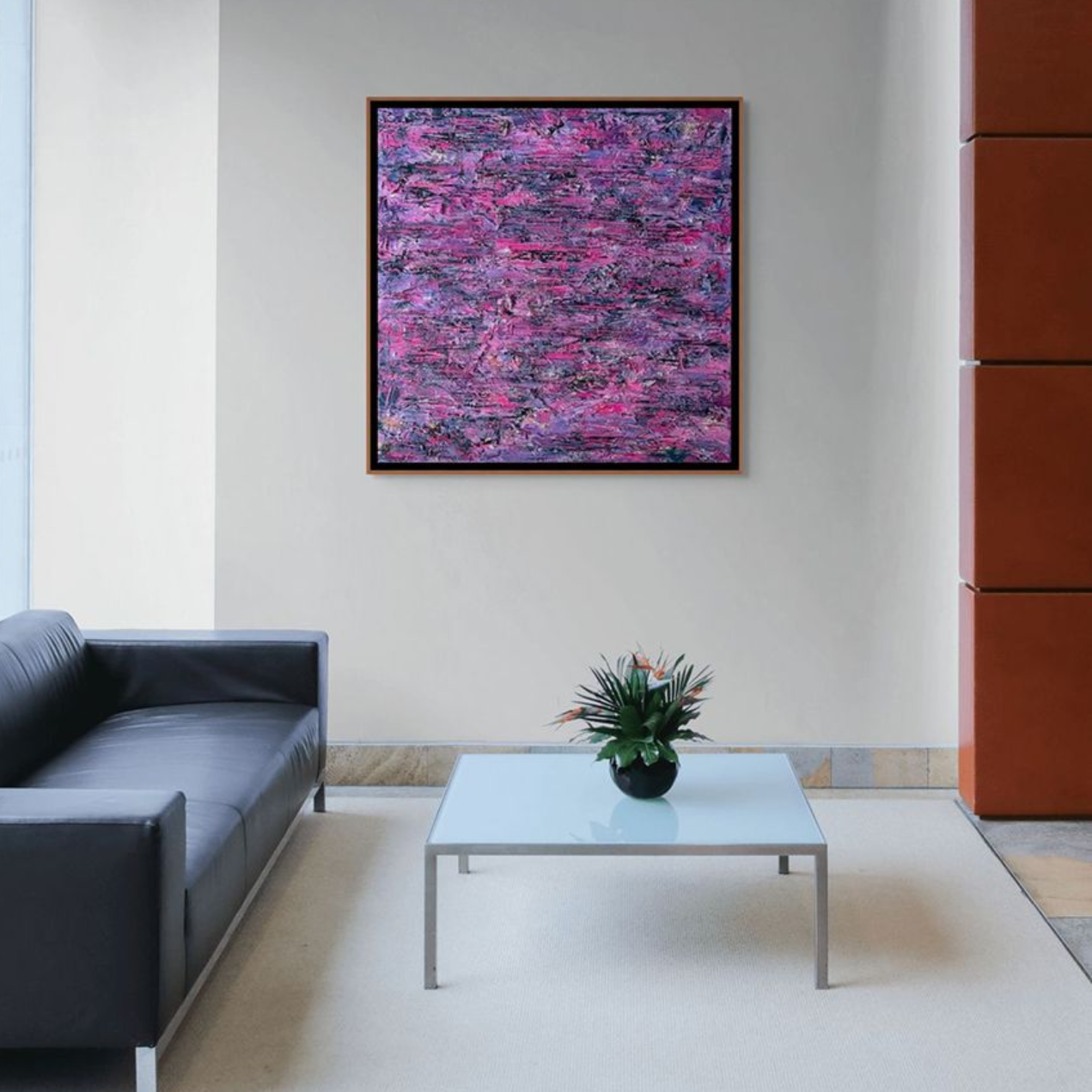
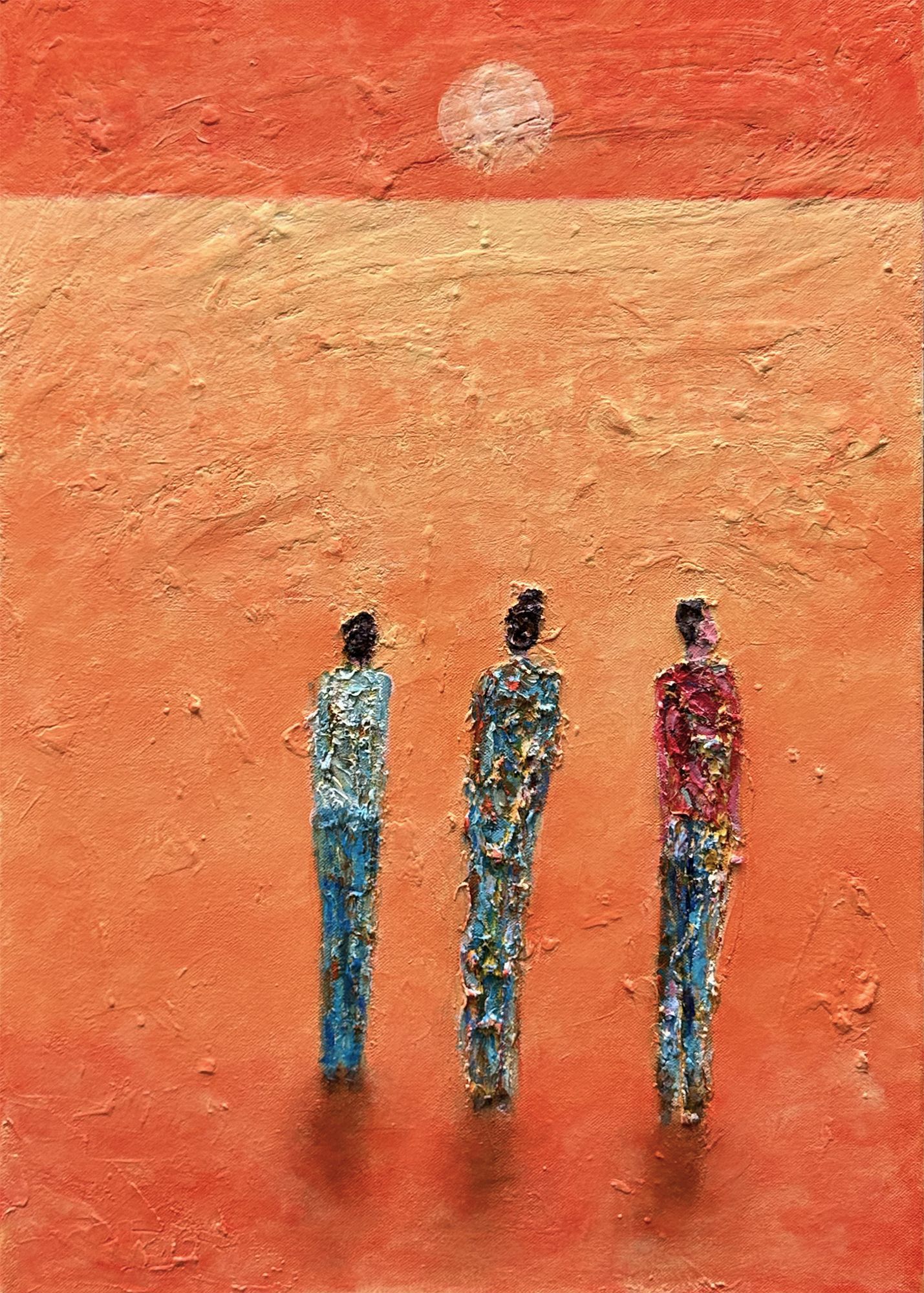
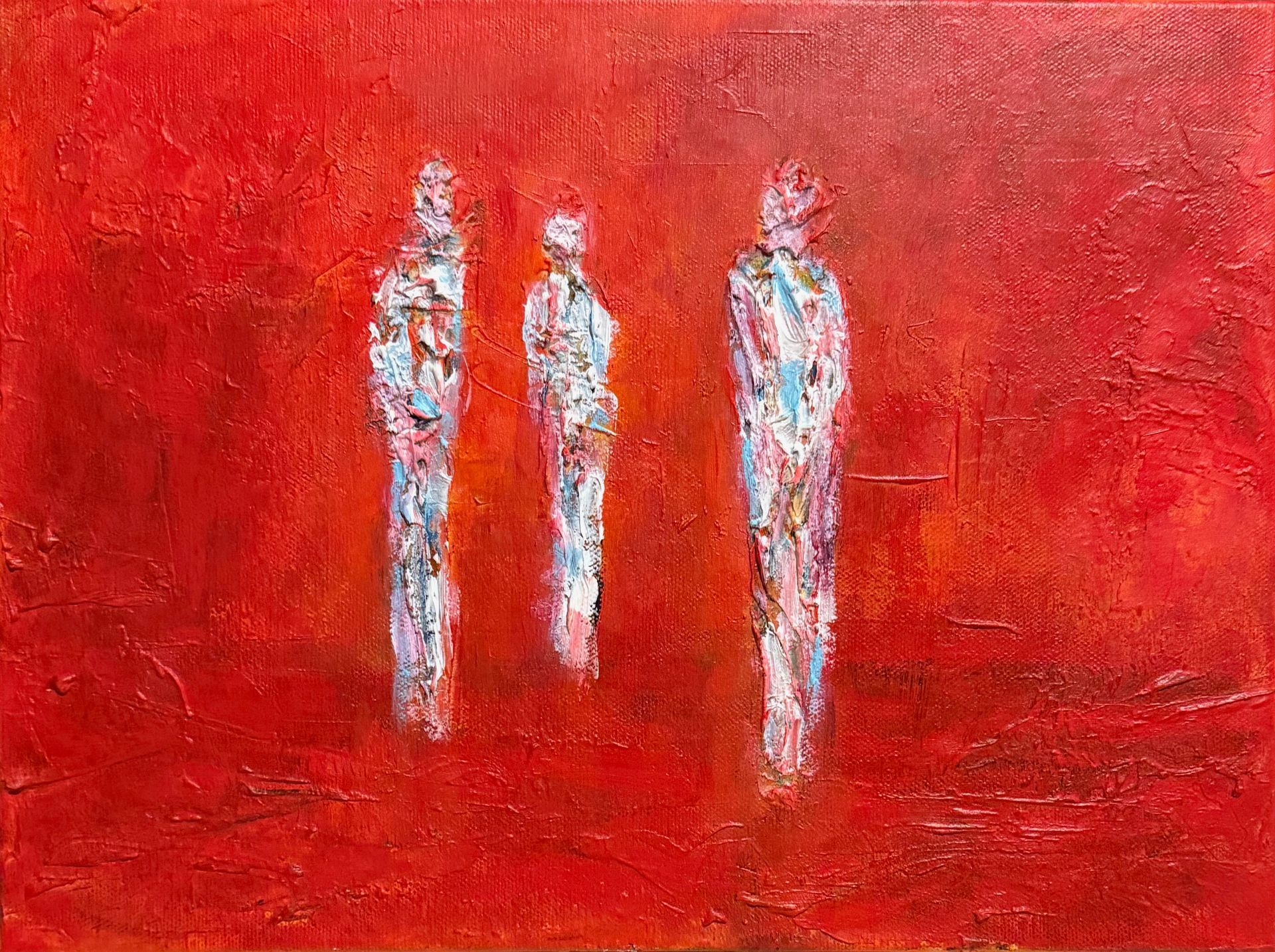
Two different scales create different kinds of presence: a smaller framed work invites close looking, while a larger painting anchors the room.
How do I choose the right size painting for a wall?
Start with the wall, but do not think about the wall on its own. A painting usually works best when it relates to what is around it: a sofa, a sideboard, a bed, a fireplace, a hallway, or the shape of the room itself. The painting should feel connected to the space, not stranded in the middle of it.
A useful starting point is to let the artwork take up around 60% to 75% of the available wall width, especially when it is hanging above furniture. This is often called the 2/3 rule or the 4/7 rule. It is not a strict law, but it helps prevent a common mistake: choosing something too small.
A small painting on a large empty wall can look lost unless it is placed deliberately. A large painting can feel powerful, but it still needs breathing room around it. The aim is not perfection. The aim is balance.
What size painting should go above a sofa?
For artwork above a sofa, the painting should usually be around two-thirds to three-quarters of the sofa’s width.
So, if your sofa is 210cm wide, a painting around 140cm to 160cm wide will often feel balanced. It does not have to be exact, but the artwork should feel visually connected to the sofa beneath it.
The bottom of the painting should usually sit around 15cm to 25cm above the sofa. Too high, and the painting can feel disconnected. Too low, and it may feel cramped.
The same principle works for sideboards, beds, and console tables. Let the furniture support the painting visually. The two should feel as if they belong together.
Should art be centred on the wall or the furniture?
In most cases, centre the painting over the furniture, not the whole wall.
This is especially true if the furniture is not centred in the room. A painting centred on the wall while the sofa sits slightly to one side can make the whole arrangement feel off balance.
Think of the painting and furniture as one composition. The wall is the background, but the relationship between objects is what creates the sense of order.
There are exceptions, of course. Sometimes an off-centre painting can feel more alive, especially in a room that is already asymmetrical. But it should feel intentional, not accidental.
How high should I hang a painting?
A common gallery guide is to hang artwork so that the centre of the painting is around 145cm to 150cm from the floor. This places the work roughly at eye level for most people.
But homes are not galleries, and the height can change depending on the room.
In a hallway, eye level may work well because people are usually standing. In a dining room, bedroom, or reading area, you may want the painting slightly lower because people experience the room while seated.
The important thing is that the painting feels connected to human scale. It should not float too high above the room. A painting that is hung too high can feel strangely distant, even if the size is right.
How do I test the size before buying?
The simplest method is still one of the best: use paper or masking tape. Mark out the exact dimensions of the painting on your wall. Live with that shape for a day or two. Walk past it. Sit with it. Look at it in morning light, afternoon light, and evening light. This helps you understand the physical presence of the work before it arrives.
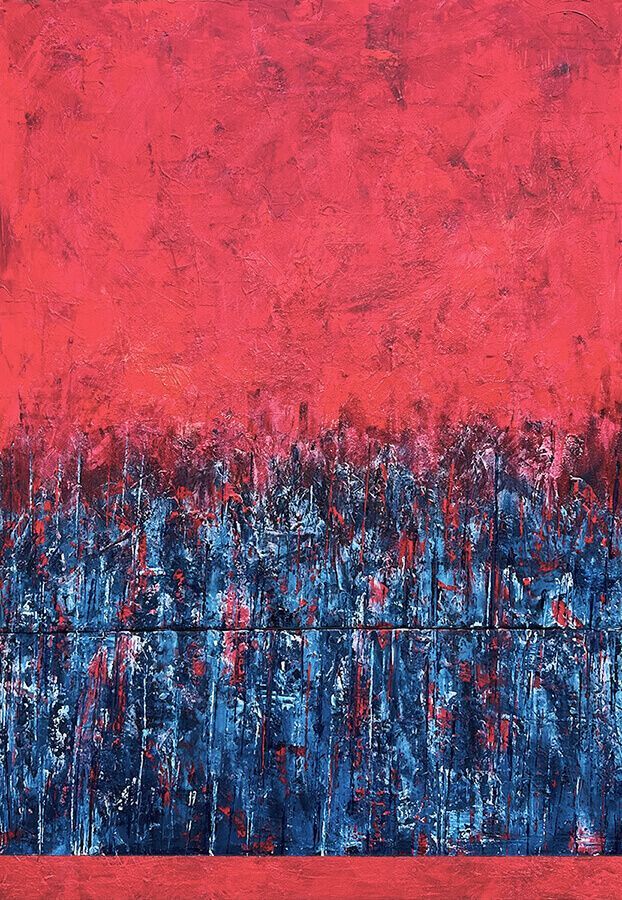
A digital preview can be useful, but it does not tell the whole story, especially with textured paintings. A painting with raised surfaces, plaster, or thick acrylic behaves differently from a flat image on a screen. It casts small shadows. It catches light. It has a physical depth.
That depth affects scale.
A textured painting may feel larger or heavier than its measurements suggest.
How does texture change the size of a painting?
Texture changes the visual weight of a painting.
A flat, pale image may feel light and quiet, even at a larger size. A darker or heavily textured work may feel more present, even if it is smaller. Raised surfaces catch light and create shadow, which means the painting changes throughout the day.
This is important when looking at textured acrylic paintings or original works with plaster, scraping, and layered surfaces.
The size written on the listing tells you the dimensions, but it does not tell you everything about presence. Surface matters. Colour matters. Darkness matters. The amount of movement in the painting matters.
A painting is not just height by width. It has weight, even before it is framed.
Should I choose a large painting or a smaller one?
A large painting can anchor a room. It can become the main point of focus. It suits spaces where you want the artwork to hold attention: above a sofa, over a bed, in a hallway, or on a large open wall.
A smaller painting does something different. It invites a closer look. It can work beautifully in a study, bedroom, alcove, reading corner, or narrow hallway. Smaller works often feel more private. They ask the viewer to come towards them.
Neither is better. They just create different experiences.
The question is: what do you want the painting to do in the room? Do you want it to hold the space from a distance? Or do you want it to create a quieter moment of attention?
Do figurative and abstract paintings work differently at different sizes?
Yes, they can.
A large abstract painting can feel immersive. It can change the atmosphere of a room through colour, movement, and surface. It often needs space around it so the marks can breathe.
A figurative painting works differently because the human form brings a psychological presence. Even a small figure can hold a room if the image is strong. A larger figure can feel almost like another presence in the space.
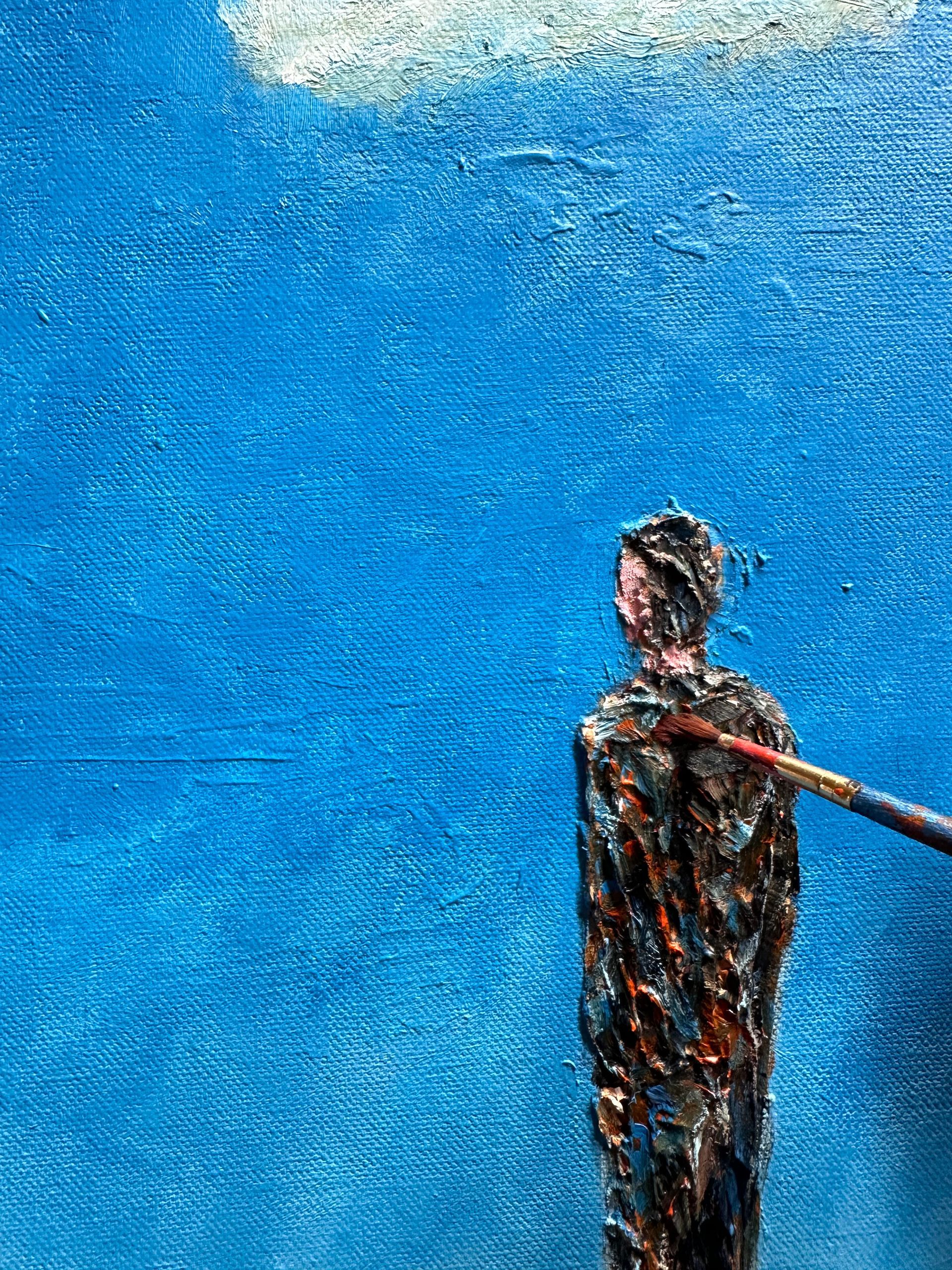
In my own work, where the figure often sits between memory, abstraction, and surface, scale changes the emotional tone of the painting. A small figure can feel vulnerable or intimate. A larger figure can feel more confrontational, more present, or more difficult to ignore.
That is why scale is not only a practical decision. It changes the story the painting tells.
Should I include the frame when measuring?
Yes. Always include the frame when measuring.
A floating frame or tray frame can add several centimetres to the overall size of the artwork. That might not matter on a large open wall, but it can make a difference in an alcove, hallway, or above a narrow piece of furniture.
Also consider depth. Some original paintings sit away from the wall because of the stretcher bars or frame. That shadow can add to the object’s presence.
Before buying, check:
- canvas size
- framed size, if applicable
- depth from the wall
- available wall width
- nearby doors, lamps, shelves, or switches
These small details help avoid surprises.
Can a small painting work on a large wall?
Yes, but it needs intention.
A small painting on a large wall can feel lost if it is treated like a statement piece. But it can work beautifully if it is placed as a quiet point of focus.
For example, a small painting near a chair, lamp, side table, or shelf can create an intimate corner. It becomes something discovered rather than something that dominates the room.
You can also group smaller works together, but they need enough space between them to breathe. A group of paintings should feel like a considered arrangement, not a wall filled because it was empty.
Sometimes quiet placement is stronger than scale.
Choosing a painting that feels right
The measurements matter, but they are not the whole decision. A painting has to feel right. It has to hold your attention. It should be something you want to return to, not just something that fills a gap.
When choosing an original painting, ask yourself:
- Does the size feel comfortable in the room?
- Does the painting have enough space around it?
- Does the surface change in different light?
- Does it feel connected to the furniture or architecture?
- Do I still want to look at it after the first impression?
That last question matters.
A painting becomes part of daily life. You pass it in different moods. You see it in different light. It should have enough depth to stay with you.
Finding the right scale in my work
Across my available original paintings, scale changes how the work is experienced. Some pieces are made to hold a room. Others are quieter and ask for closer looking. The textured surfaces, layered acrylic, plaster, and partially emerging figures all affect how large or intimate a painting feels once it is placed in a space.
This connects closely to my painting practice, where surface, memory, and the figure often shape one another. A painting may begin in the studio, but it continues its life wherever it is placed.
Choosing the right size painting is not just about filling a wall. It is about finding the point where the work, the room, and your own response meet.
Frequently Asked Questions
What is the best size painting over a sofa?
A painting over a sofa usually works best when it is around two-thirds to three-quarters of the sofa’s width. For a 210cm sofa, that means a painting around 140cm to 160cm wide will often feel balanced.
How high should I hang a painting?
A good general guide is to hang the centre of the painting around 145cm to 150cm from the floor. In rooms where people are usually seated, such as dining rooms or bedrooms, you may want to hang the work slightly lower.
Should artwork be centred on the wall or the furniture?
Artwork should usually be centred over the furniture rather than the wall. This helps the painting, sofa, bed, or sideboard feel like one connected arrangement.
How much wall space should a painting take up?
As a general guide, a painting should take up around 60% to 75% of the available wall width, especially when placed above furniture. This helps the work feel substantial without overwhelming the space.
How do I know if a painting is too small?
A painting may be too small if it feels disconnected from the furniture below it or looks lost on the wall. Smaller works can still be powerful, but they often need a more intimate placement or to be grouped with other pieces.
How do I know if a painting is too large?
A painting may be too large if it leaves very little breathing room around the edges, crowds the ceiling or furniture, or overwhelms the room. A large work should feel confident, not cramped.
Do textured paintings look bigger than flat prints?
Textured paintings can feel visually heavier than flat prints because raised surfaces catch light and create shadow. This means a textured acrylic or plaster painting may have more presence than a flat image of the same size.
Should I measure the canvas or the frame?
Measure the full outside dimensions, including the frame. A floating or tray frame can add several centimetres to the overall width and height.
share to family and friends